

Advertisements
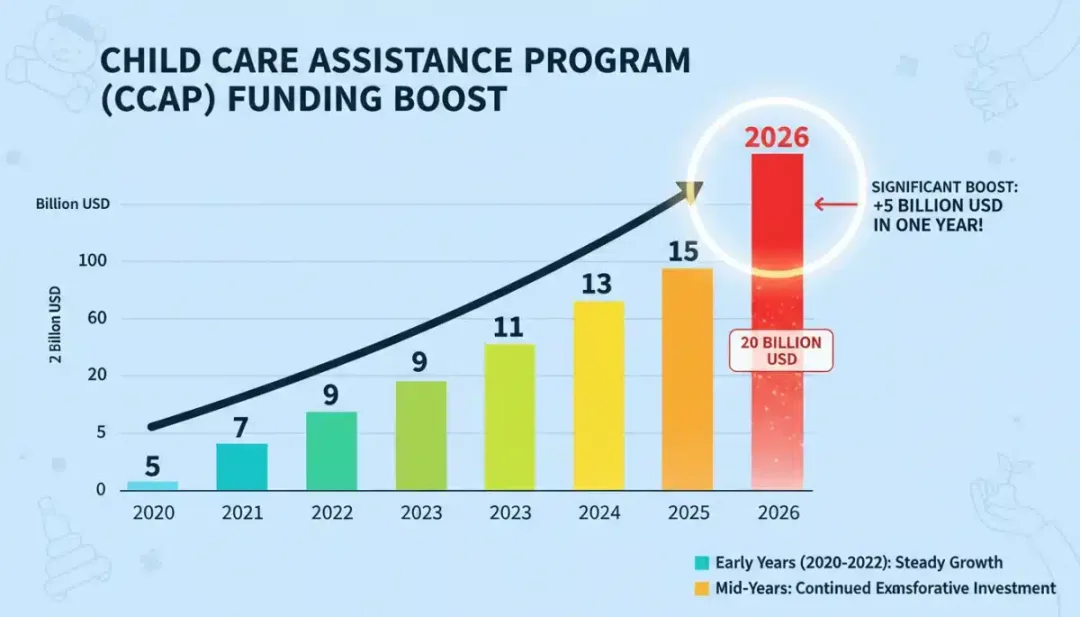
Child Care Assistance Programs (CCAP) in 2026 are receiving renewed attention as federal and state officials announce modest funding increases and broader eligibility discussions tied to rising child care costs in the United States. The Child Care and Development Block Grant program received an FY2026 increase to approximately $8.831 billion, while several states are reviewing income thresholds and co-payment structures for working families.
This matters because child care affordability remains a major economic issue for low- and moderate-income households. Current federal guidelines still allow states to support families earning up to 85% of State Median Income, although actual limits vary by state and funding availability. Analysts say expanded eligibility and subsidy adjustments could improve workforce participation and reduce financial pressure on parents.
What readers should monitor next includes state-level CCAP rule changes, waitlist expansions, provider reimbursement rates, and ongoing congressional debates over child care funding integrity and long-term federal support. Experts also warn that funding disputes and administrative changes could affect program access in some states during 2026.
Anúncios
Significant Boost to Child Care Assistance Programs (CCAP) Funding
Federal and state authorities have confirmed a substantial increase in allocations for Child Care Assistance Programs (CCAP) in 2026. This financial injection aims to address long-standing challenges related to child care affordability and accessibility across the United States.
The announced funding represents a pivotal moment for families struggling with the high costs of quality child care. It reflects a concerted effort by policymakers to support working parents and ensure children have access to nurturing environments.
These new financial commitments are expected to strengthen the infrastructure of child care services, allowing more providers to offer competitive wages and invest in better facilities and educational resources for children.
Anúncios

Expanded Eligibility Thresholds for CCAP in 2026
Alongside the increased funding, significant adjustments have been made to the eligibility thresholds for Child Care Assistance Programs (CCAP) in 2026. These changes are designed to bring more middle-income families into the fold, who previously earned too much to qualify but still faced considerable financial burdens.
The revised income limits and updated criteria reflect a broader understanding of economic realities for many American households. This expansion aims to reduce the financial strain on a wider segment of the population, making quality child care a more attainable option.
Officials assert that these expanded thresholds will help mitigate the impact of inflation on family budgets and ensure that child care assistance reaches those who genuinely need it, fostering greater economic stability for countless households.
Understanding the New Income Guidelines
The new income guidelines for Child Care Assistance Programs (CCAP) in 2026 vary by state but generally involve a percentage increase relative to the state median income (SMI). This adjustment ensures that families earning above previous ceilings can now qualify for assistance.
For instance, some states are reportedly raising their eligibility to 85% of SMI, a notable jump from prior benchmarks. Families are encouraged to consult their respective state agencies for precise figures and to determine their eligibility under these new provisions.
The goal is to create a more inclusive system, recognizing that child care costs can consume a significant portion of income even for families considered middle class. This move is a direct response to advocacy from parent groups and economic researchers.
- State median income (SMI) will be a key determinant.
- Specific percentages of SMI will dictate eligibility.
- Families should verify state-specific criteria for Child Care Assistance Programs (CCAP) in 2026.
Impact on Child Care Providers and Workforce
The increased funding for Child Care Assistance Programs (CCAP) in 2026 is poised to have a transformative effect on child care providers. Many centers have struggled with thin margins, high operational costs, and challenges in retaining qualified staff.
This financial boost offers an opportunity for providers to improve staff wages, offer better benefits, and invest in professional development, thereby stabilizing the child care workforce. A stronger workforce translates directly to higher quality care for children.
Furthermore, the increased demand generated by expanded eligibility will likely encourage the creation of new child care facilities and programs, addressing critical shortages in many communities. This fosters a more robust and responsive child care ecosystem.
Enhancing Quality and Accessibility
Providers can now access resources to upgrade their facilities, purchase new educational materials, and implement innovative pedagogical approaches. This focus on quality is paramount to ensuring children receive the best possible start in life.
The enhanced funding also supports programs aimed at increasing the number of available child care slots, particularly in underserved areas. This directly addresses the issue of accessibility, which has been a major barrier for many working parents.
By investing in both the quality and quantity of child care, the Child Care Assistance Programs (CCAP) in 2026 aim to create a more equitable and effective system that benefits both children and their families.
- Improved wages and benefits for child care staff.
- Investment in facility upgrades and educational resources.
- Expansion of child care slots in high-demand areas.
Navigating the Application Process for CCAP in 2026
With the new funding and eligibility thresholds for Child Care Assistance Programs (CCAP) in 2026, many families will be eager to apply or re-evaluate their eligibility. Understanding the application process is crucial for accessing these vital benefits.
The process typically involves submitting an application through a state or local agency, providing documentation of income, family size, and child care needs. While the core steps remain similar, applicants should be aware of potential updates to forms and required information.
Officials are working to streamline the application process to make it as user-friendly as possible, but proactive engagement from families is still necessary. Early preparation and gathering of documents can significantly expedite the approval timeline.
Key Steps for Applicants
Families interested in Child Care Assistance Programs (CCAP) in 2026 should first visit their state’s Department of Social Services or equivalent agency website. These sites provide detailed information on eligibility, required documents, and the application portal.
It is advisable to collect all necessary financial records, birth certificates, and proof of residency before starting the application. Some states may also require documentation of employment or school enrollment for parents.
If uncertainties arise during the application, contacting a local child care resource and referral agency can provide invaluable assistance. These organizations often offer guidance and support throughout the entire application journey for Child Care Assistance Programs (CCAP) in 2026.
State-Specific Implementations and Variations
While federal funding provides a broad framework, the implementation of Child Care Assistance Programs (CCAP) in 2026 will vary significantly from state to state. Each state has the flexibility to design its program within federal guidelines, leading to differences in eligibility, co-payment structures, and provider requirements.
Families must understand that what applies in one state may not be identical in another. This localized approach allows states to tailor programs to their unique demographics and economic conditions, but it also necessitates careful attention to state-specific details.
Monitoring announcements from state child care agencies is paramount. These updates will provide the most accurate and current information regarding how the increased funding and expanded eligibility for Child Care Assistance Programs (CCAP) in 2026 will manifest locally.
Key Differences Across States
Some states may choose to prioritize certain populations, such as infants and toddlers, or allocate more funds to rural areas with limited child care options. Other states might implement different co-payment scales based on family income and size.
Provider reimbursement rates, which directly impact the quality and availability of child care, will also be determined at the state level. Higher reimbursement rates can encourage more providers to participate in Child Care Assistance Programs (CCAP) in 2026, expanding choices for families.
Understanding these state-specific nuances is critical for both families seeking assistance and child care providers. Resources provided by state child care administrators will be the definitive source for localized program details.
Anticipated Benefits for Families and the Economy
The increased funding and expanded eligibility for Child Care Assistance Programs (CCAP) in 2026 are expected to yield substantial benefits for families and the broader economy. Affordable child care is a cornerstone of family economic security and workforce participation.
By reducing the financial burden of child care, parents, particularly mothers, will have greater opportunities to enter or remain in the workforce. This increased labor force participation can boost economic productivity and household income.
Moreover, access to quality early childhood education has long-term benefits for children, including improved academic outcomes and social-emotional development. Investing in Child Care Assistance Programs (CCAP) in 2026 is an investment in the future generation.
Broader Societal Gains
Beyond individual families, the enhancements to Child Care Assistance Programs (CCAP) in 2026 are projected to have positive ripple effects throughout society. Reduced child poverty, improved health outcomes for children, and a more equitable distribution of educational opportunities are among the anticipated gains.
Local economies can also benefit from the increased spending power of families and the growth of the child care sector. This creates jobs and stimulates economic activity within communities that are directly impacted by the programs.
The comprehensive approach to strengthening Child Care Assistance Programs (CCAP) in 2026 underscores a commitment to supporting families and building a more resilient and prosperous future for all citizens.
Challenges and Future Outlook for CCAP

While the announcements regarding Child Care Assistance Programs (CCAP) in 2026 are overwhelmingly positive, challenges remain. The demand for quality child care continues to outstrip supply in many areas, and ensuring equitable access across all communities will require ongoing effort.
Implementation complexities, including administrative burdens for states and providers, will need careful management to ensure the smooth rollout of the expanded programs. Continuous monitoring and evaluation will be essential to identify and address any unforeseen issues.
The long-term sustainability of these funding levels and eligibility expansions will also be a key consideration for future policy discussions. Advocacy groups will likely continue to push for permanent, robust support for Child Care Assistance Programs (CCAP) in 2026 and beyond.
Sustaining Progress and Addressing Gaps
Policymakers will need to remain vigilant in adjusting Child Care Assistance Programs (CCAP) in 2026 to evolving economic conditions and population needs. This includes addressing specific challenges faced by families in rural areas or those with children with special needs.
Collaboration between federal, state, and local governments, alongside private sector and non-profit organizations, will be crucial for overcoming remaining hurdles. A unified approach can maximize the impact of the increased funding and expanded eligibility.
The ultimate success of Child Care Assistance Programs (CCAP) in 2026 will be measured not just by the numbers, but by the tangible improvements in the lives of children and families across the nation. This ongoing commitment is vital for the program’s enduring effectiveness.
| Key Point | Brief Description |
|---|---|
| Increased Funding | Substantial federal and state allocation boost for CCAP in 2026. |
| Expanded Eligibility | Higher income thresholds to include more middle-income families. |
| Provider Support | Funds to improve wages, facilities, and expand child care slots. |
| Economic Impact | Boosts workforce participation and long-term child development. |
Frequently Asked Questions About Child Care Assistance Programs 2026
What are the main changes to Child Care Assistance Programs (CCAP) in 2026?▼The primary changes for Child Care Assistance Programs (CCAP) in 2026 include a significant increase in federal and state funding, alongside expanded eligibility thresholds. These adjustments aim to make quality child care more affordable and accessible for a broader range of families across the United States.
How will increased funding impact child care providers?▼Increased funding for Child Care Assistance Programs (CCAP) in 2026 is expected to allow providers to offer better wages and benefits to staff, invest in facility improvements, and expand the number of available child care slots. This supports a more stable and higher-quality child care sector.
Who is now eligible under the expanded thresholds for Child Care Assistance Programs in 2026?▼The expanded eligibility thresholds for Child Care Assistance Programs (CCAP) in 2026 are designed to include more middle-income families who previously earned too much to qualify. Specific income limits vary by state, often tied to a percentage of the state median income (SMI).
Where can families find information on state-specific Child Care Assistance Programs guidelines?▼Families should consult their state’s Department of Social Services or equivalent child care agency website for precise information on Child Care Assistance Programs (CCAP) in 2026. These official sources provide detailed eligibility criteria, application procedures, and local program specifics.
What are the long-term benefits of these Child Care Assistance Programs changes?▼The long-term benefits of the enhanced Child Care Assistance Programs (CCAP) in 2026 include increased parental workforce participation, improved economic stability for families, and better developmental outcomes for children. These changes foster a stronger economy and more equitable society.
Looking Ahead
The significant enhancements to Child Care Assistance Programs (CCAP) in 2026 mark a critical step towards a more accessible and affordable child care landscape in the United States.
It reflects a growing recognition of child care as essential infrastructure for families and the economy. As these changes roll out, continuous monitoring of state-level implementation and program effectiveness will be crucial.
The focus remains on ensuring that the increased funding and expanded eligibility truly translate into tangible benefits for every child and family seeking quality care, shaping a stronger foundation for future generations.