
Advertisements
In 2026, ray tracing and 144Hz displays remain relevant but face new competition. While ray tracing delivers stunning visual fidelity, hardware acceleration makes it more accessible. Meanwhile, 144Hz has become the baseline, with 240Hz and OLED panels pushing the boundaries of gaming performance.
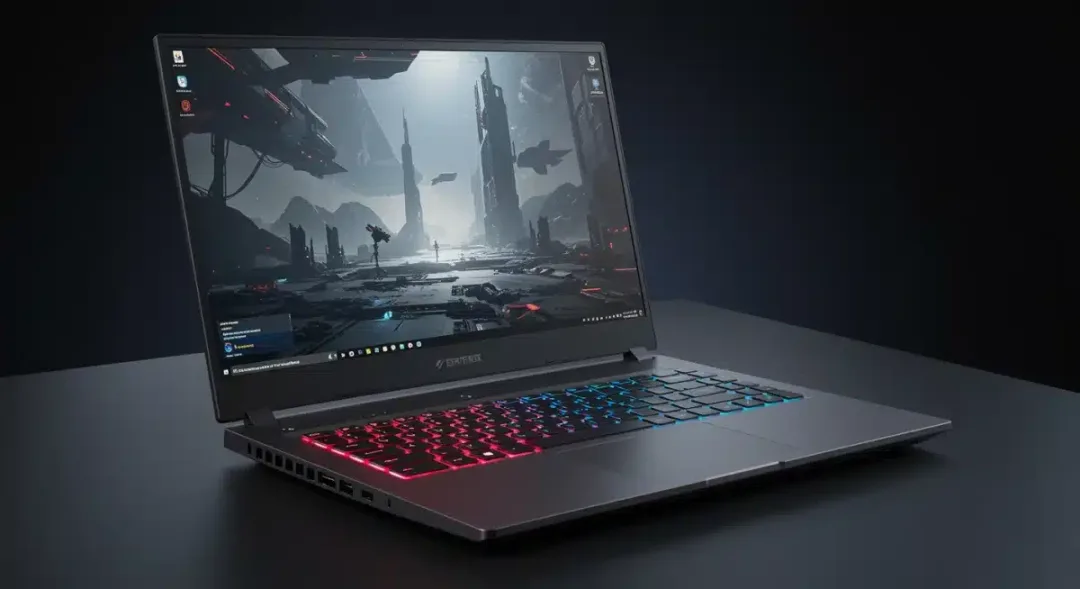
The landscape of gaming laptops has transformed dramatically over the past few years, leaving many gamers wondering whether the features that once defined premium portable gaming still matter. The Future of Gaming Laptops: Are Ray Tracing and 144Hz Displays Still Relevant in 2026? is no longer a simple question—it is a complex discussion about how technology evolves and how consumer priorities shift with each new generation of hardware. As we navigate through the latest releases from major manufacturers, one thing becomes clear: the definition of “cutting-edge” has expanded significantly.
Ray Tracing Technology: Hype or Essential?
Ray tracing has traveled a fascinating path from being a marketing buzzword to becoming a genuine standard in gaming visuals. The technology simulates how light behaves in the real world, creating reflections, shadows, and global illumination that were previously impossible to render in real time. In 2026, this capability has matured considerably, moving beyond the realm of flagship-only features into more accessible price tiers.
Anúncios
The biggest shift has come from hardware optimization. Modern GPUs from both NVIDIA and AMD now include dedicated ray tracing cores that handle these calculations without crippling frame rates. What once required a $2,000 gaming laptop can now be experienced on systems costing half that amount. This democratization has fundamentally changed how developers approach visual design, with many titles now building their graphics pipelines around ray traced lighting as a baseline rather than an optional enhancement.

Current Ray Tracing Capabilities
- Real-time global illumination in open-world games
- Accurate reflections on wet surfaces and metallic objects
- Dynamic shadows that respond naturally to light sources
- Improved ambient occlusion for enhanced depth perception
However, the technology is not without its trade-offs. Enabling ray tracing still impacts performance, and gamers who prioritize competitive frame rates over visual fidelity often disable these features. The question of relevance ultimately depends on how individual users value visual immersion versus raw performance. For single-player experiences where atmosphere matters, ray tracing has become essential. For esports and competitive gaming, the technology remains a nice-to-have feature rather than a determining factor.
144Hz Displays: The New Standard
When 144Hz monitors first entered the consumer market, they represented a significant leap forward in display technology. The smoothness they offered compared to the standard 60Hz was immediately noticeable, with reduced motion blur and more responsive input handling. Fast forward to 2026, and this refresh rate has essentially become the minimum expectation for any gaming laptop worth considering.
Anúncios
The normalization of 144Hz panels reflects broader changes in the gaming industry. Esports has grown exponentially, and competitive players have driven demand for faster displays. Manufacturers have responded by equipping even budget-friendly gaming laptops with 144Hz or higher refresh rates, making smooth gameplay accessible to a wider audience. This ubiquity has paradoxically diminished the feature’s status as a premium differentiator.
Refresh Rate Evolution
- 60Hz: Traditional standard, still common in non-gaming laptops
- 144Hz: Current baseline for gaming laptops
- 240Hz: Premium option for competitive gamers
- 360Hz: Niche option appearing in flagship models
The relevance of 144Hz in 2026 is nuanced. It remains highly relevant as a minimum standard, but it no longer represents an impressive specification. Gamers looking for the best experience should consider higher refresh rates or focus on other display qualities like response time, color accuracy, and panel technology. The 144Hz era has not ended—it has simply been absorbed into the baseline expectations for gaming hardware.
GPU Evolution in Gaming Laptops
The processing power available in gaming laptops has increased substantially, with each generation delivering meaningful improvements in both traditional rasterization and ray tracing performance. The latest mobile GPUs feature architecture optimizations that allow them to approach desktop-class performance while managing thermals within the constraints of portable form factors.
What makes the 2026 landscape particularly interesting is the convergence of multiple performance pathways. Gamers can now choose between systems optimized for raw frame rates, others designed for visual fidelity with ray tracing, and some that attempt to balance both objectives. This variety means that the question of relevance for specific features must be answered in the context of intended use cases rather than general recommendations.
The rise of AI-enhanced upscaling technologies has also complicated the performance equation. Technologies like NVIDIA’s DLSS and AMD’s FSR allow games to render at lower resolutions and upscale to higher ones, effectively providing better performance without sacrificing visual quality. These solutions have become increasingly sophisticated, making them viable alternatives to traditional rendering for many gamers.
Display Technology Beyond Refresh Rate
While refresh rate has dominated gaming display discussions, other technologies have emerged that significantly impact the visual experience. OLED panels have become increasingly common in gaming laptops, offering superior contrast ratios, deeper blacks, and faster response times than traditional LCD implementations. These advantages make OLED displays particularly appealing for single-player games where visual quality takes priority over competitive performance.
Mini-LED technology represents another significant advancement, providing improved brightness and local dimming zones compared to conventional backlighting. This approach delivers HDR content with greater impact while avoiding some of the burn-in concerns associated with OLED. The choice between these technologies now represents a meaningful decision point for buyers, with each option offering distinct advantages for different types of gaming experiences.
Display Technology Comparison
- IPS LCD: Reliable color accuracy, moderate response times
- OLED: Best contrast, fastest response, burn-in risk
- Mini-LED: Excellent brightness, improved HDR performance
- Fast IPS: Balanced approach with improved response times
The relevance of specific display features now depends heavily on individual preferences and use cases. A competitive esports player might prioritize refresh rate and response time, while someone focused on single-player narrative games might value color accuracy and contrast. This diversification represents a healthy evolution in the market, offering options that cater to different priorities rather than a one-size-fits-all approach.
Battery Life and Portability Considerations
Gaming laptops have historically struggled with battery life, often providing only a few hours of untethered use. The 2026 generation shows meaningful improvements in this area, with more efficient GPU architectures and better power management allowing for extended away-from-outlet sessions. However, the relationship between performance and battery life remains a fundamental trade-off that buyers must consider.
Modern gaming laptops address this challenge through flexible performance modes that allow users to prioritize either power or endurance. When traveling or in situations where charging is impractical, switching to a more conservative power profile can extend battery life substantially. This adaptability has made gaming laptops more viable for users who need versatile machines that can handle both work and play.
Weight and dimensions have also evolved, with manufacturers increasingly focusing on portable designs that do not compromise on performance. The days of bulky, heavy gaming laptops are fading, replaced by sleeker options that can be transported comfortably. This shift has expanded the potential audience for gaming laptops, making them practical for students, remote workers, and anyone who values portability alongside performance.
Price Trends and Value Proposition
The pricing landscape for gaming laptops has become more complex as the market segments into distinct tiers. Premium models continue to command high prices, offering the latest hardware, premium displays, and sophisticated cooling solutions. Meanwhile, mid-range options have improved substantially, providing capable performance at more accessible price points.
This democratization of performance has been particularly beneficial for ray tracing and high refresh rate features. Technologies that were once exclusive to expensive systems have trickled down to more affordable options, improving the value proposition across the market. Buyers in 2026 can find capable gaming laptops at various price levels, though the specific features and overall quality vary considerably between tiers.
Price Tier Expectations
- Entry Level ($800-$1200): 144Hz displays, capable mid-range GPUs
- Mid-Range ($1200-$1800): Strong ray tracing support, 144Hz+ panels
- Premium ($1800-$2500): High-end GPUs, OLED or Mini-LED displays
- Enthusiast ($2500+): Desktop-class performance, premium materials
The value proposition in 2026 is stronger than ever for gaming laptop buyers. Competition among manufacturers has driven innovation while keeping prices relatively stable, and the baseline quality of even affordable options has improved dramatically. Understanding one’s priorities and budget constraints is more important than ever when navigating the available choices.
Making the Right Choice in 2026
Deciding which gaming laptop features matter most requires honest self-assessment of how you plan to use the machine. Competitive gamers will still benefit from high refresh rate displays and low input lag, while those who appreciate visual fidelity should prioritize ray tracing capability and display quality. Many users will find that the best choice involves balancing multiple factors rather than maximizing any single specification.
The relevance of ray tracing and 144Hz displays in 2026 ultimately depends on context. Neither technology has become obsolete, but neither represents the cutting edge any longer. The market has evolved to offer options that address various priorities, making it possible to find a gaming laptop that matches specific needs without paying for unnecessary features.
Future-proofing considerations also matter when making purchasing decisions. Investing in a system with ray tracing capability ensures compatibility with upcoming games that will increasingly rely on this technology. Similarly, choosing a display with higher refresh rates provides headroom for future improvements in frame rates. These forward-looking considerations can help justify premium investments for users who plan to keep their laptops for several years.
| Key Point | Brief Description |
|---|---|
| Ray Tracing Status | Now accessible on mid-range laptops, essential for visual fidelity in single-player games |
| 144Hz Relevance | Has become the baseline standard; higher refresh rates now differentiate premium models |
| Display Innovation | OLED and Mini-LED technologies offer superior contrast and HDR performance |
| Value in 2026 | Strong options at every price tier; competition drives innovation and keeps prices reasonable |
Frequently Asked Questions
Is ray tracing worth enabling on gaming laptops in 2026?▼Ray tracing is absolutely worth enabling in 2026, especially on mid-range and premium laptops. Modern GPUs handle ray tracing much better than earlier generations, and dedicated hardware acceleration makes the performance impact more manageable. For single-player games where visual immersion matters, ray tracing significantly enhances the experience with realistic lighting and reflections.
Should I prioritize 144Hz over other display features?▼In 2026, 144Hz should be considered a minimum requirement rather than a priority feature. Most gaming laptops already include this refresh rate, so focusing on other qualities like panel type (OLED vs. IPS), color accuracy, response time, and HDR support will likely yield better results. Competitive gamers may still benefit from higher refresh rates like 240Hz or 360Hz.
What is the best display technology for gaming laptops?▼The best display technology depends on your priorities. OLED offers the best contrast and fastest response times, ideal for single-player games and media consumption. Mini-LED provides excellent brightness and HDR performance without burn-in concerns. IPS panels remain reliable choices with good color accuracy and more affordable pricing. Consider your primary use case when choosing.
How long do gaming laptops typically last in 2026?▼A quality gaming laptop purchased in 2026 should remain capable for 4-6 years with moderate upgrades. Battery degradation and evolving game requirements are the primary limiting factors. Investing in a system with upgradeable RAM and storage can extend useful lifespan. The rapid pace of technology means newer games will eventually require more powerful hardware, but current mid-range systems will handle most titles comfortably for several years.
Are gaming laptops better value than desktop PCs in 2026?▼Gaming laptops offer superior portability and convenience, but desktops still provide better raw performance per dollar. The premium you pay for portable gaming includes integrated display, keyboard, and compact form factor. For users who travel, study, or work in various locations, laptops provide unmatched value. Desktop enthusiasts will continue to enjoy better cooling, easier upgrades, and lower overall costs for equivalent performance.
Conclusion
The future of gaming laptops in 2026 reflects a mature market where ray tracing and 144Hz displays have evolved from premium features to standard expectations. Ray tracing has become accessible across price tiers, offering genuine visual benefits for those who value immersive graphics. Meanwhile, 144Hz has been absorbed into the baseline, with the market now offering more sophisticated display options including OLED and Mini-LED technologies. The key to making the right choice lies in understanding your priorities—whether competitive performance, visual fidelity, or balanced versatility—and selecting a system that aligns with those needs. The gaming laptop landscape in 2026 offers something for everyone, making it an exciting time to be in the market for portable gaming hardware.