
How to choose between glass and plastic pantry containers
Advertisements
Choosing between glass and plastic pantry storage containers comes down to balancing weight and durability against chemical neutrality and stain resistance. Deciding on the right option helps you protect dry goods from pests, keep baking staples fresh, and maintain an organized kitchen shelf within your budget.
This comparison helps home cooks and pantry organizers select the right storage material based on shelf weight limits, daily safety, and cleaning routines. The primary trade-off is clear: glass offers long-lasting purity at the cost of weight and fragility, whereas plastic provides lightweight convenience at the expense of potential staining and eventual degradation.
Weight, shelf capacity, and handling safety
The physical weight of storage vessels directly affects how easy they are to use and how much strain they put on your cabinetry. Glass containers are considerably heavier than their plastic counterparts even before you add food. A large four-quart glass jar filled with all-purpose flour can easily weigh over ten pounds, making high-shelf retrieval difficult for children or anyone with limited grip strength. If you have adjustable wire racks or floating shelves, loading them entirely with heavy glass canisters can quickly approach structural weight limits.
Anúncios
Plastic containers provide a distinct advantage when it comes to daily handling and safety. High-grade plastic canisters are lightweight, easy to lift with one hand, and will not shatter into dangerous shards if accidentally dropped onto tile or hardwood flooring. This makes plastic a safer choice for households with young children or pets, as well as for high-traffic storage zones where containers are frequently moved onto counters.
Key physical factors to check
- Verify the maximum load capacity of your pantry shelves before purchasing heavy glass sets.
- Consider who retrieves items daily to ensure containers are manageable for everyone.
- Look for textured grips or recessed handles on large plastic bins to improve control.
- Reserve heavy glass jars for lower, waist-height shelves where dropping risks are minimal.
Food safety, odors, and chemical stability
Glass is completely non-porous and chemically inert, making it the benchmark for long-term food preservation. It does not absorb oils, strong spices, or acidic residues from stored ingredients. When you store pungent items like whole coffee beans, turmeric, or ground chili in glass, the container will not retain the aroma after a standard wash. Furthermore, glass poses zero risk of chemical migration, regardless of temperature fluctuations or contact time with fatty ingredients.
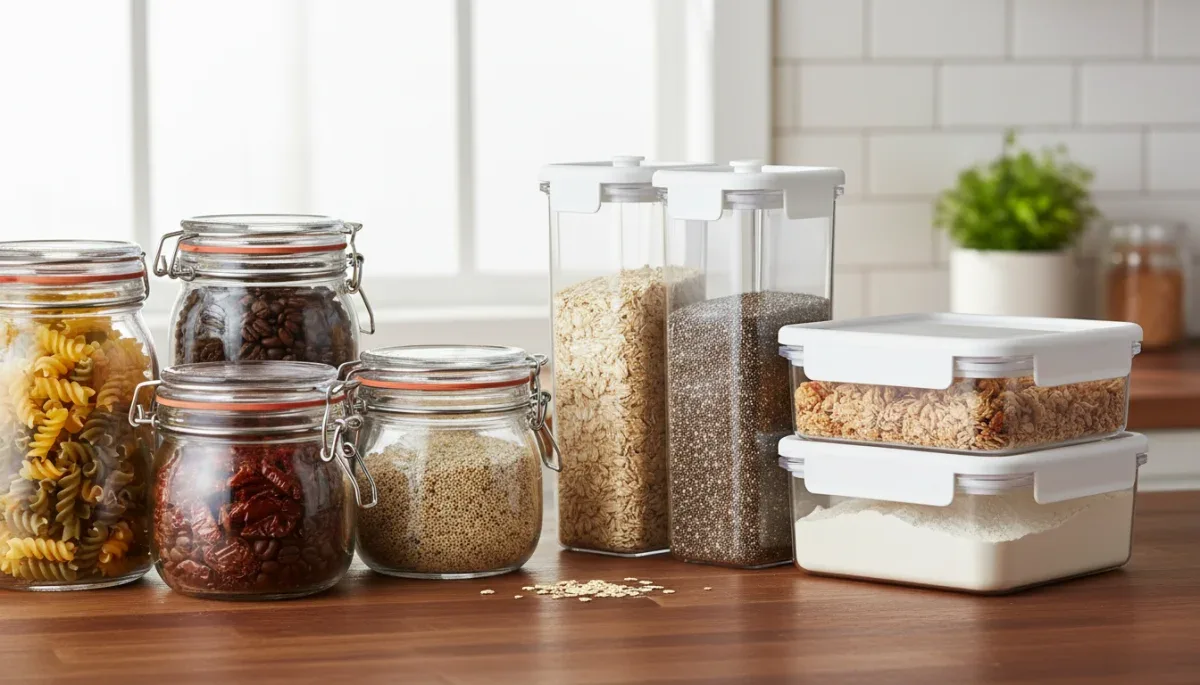
Plastic containers require careful selection regarding material composition. Modern food-grade plastic containers are typically made from polypropylene, polystyrene, or Eastman Tritan copolyester, and quality brands manufacture them without bisphenol A (BPA). However, plastic remains inherently slightly porous over extended periods. Oily foods or rich spices can cause surface clouding, discoloration, or stubborn odors that linger through multiple dishwasher cycles.
Anúncios
Material safety best practices
- Look for clear resin identification codes, such as recycling number 5 for polypropylene, on plastic bases.
- Check manufacturer packaging to confirm third-party food-contact safety certifications.
- Avoid storing heavily spiced or intensely colored ingredients in clear plastic to prevent permanent staining.
- Inspect older plastic containers periodically for micro-scratches where bacteria or moisture can linger.
Visibility, modular stacking, and cabinet space
Maximizing pantry real estate requires containers that stack securely without leaving dead space. High-end plastic container systems are often engineered with uniform square or rectangular footprints. These modular designs sit flush against one another, eliminating gaps and making full use of shelf depth. Many plastic lines also feature recessed lids that lock securely into the base of the container above them, preventing shifting when you reach for items nearby.
Glass containers frequently feature rounded shapes, tapered necks, or wire-bail clamp mechanisms. While round jars provide classic visual appeal, their cylindrical profiles create empty, unusable pockets of space on rectangular shelves. In addition, flat glass lids suitable for stable stacking are less common and often require secondary silicone gaskets that must be aligned manually. For tight cabinets or deep pull-out drawers, rectangular plastic bins often make better use of square footage.
Space optimization tips
- Measure shelf depth and vertical clearance between shelves before choosing container dimensions.
- Opt for square bases rather than round jars if you need to maximize volume on narrow shelving.
- Choose transparent containers so you can assess stock levels without opening lids.
- Check whether stacking systems allow easy access to lower bins without unstacking entire towers.
Upfront costs and realistic replacement cycles
Budget considerations involve both the initial purchase price and how frequently containers need to be replaced. Basic plastic food storage sets generally carry lower initial price points than matching sets of borosilicate glass jars. For renters or individuals outfitting a large walk-in pantry all at once, plastic allows you to decant dozens of staples without a substantial upfront investment.
However, glass delivers superior longevity over multi-year timeframes. A thick glass canister with a durable silicone gasket can last decades without losing clarity, warping, or absorbing smells. Plastic containers, even high-end Tritan varieties, eventually show surface wear, minor cracking, or lid latch fatigue after years of regular washing and UV exposure. Factoring in longevity makes glass the more economical long-term choice for permanent installations.
Cost assessment points
- Compare prices per unit rather than total set cost, as large bundled sets may include unusable sizes.
- Check if the manufacturer sells replacement silicone gaskets or lid latches separately.
- Factor in the cost of potential food waste caused by failed seals or pest ingress.
- Consider buying containers open-stock to build your collection gradually as pantry needs evolve.
Cleaning ease and temperature tolerance
Maintenance routines differ significantly between the two materials. Glass can withstand high-temperature dishwasher cycles, sanitize modes, and direct microwave heat without clouding or warping. If you ever need to sterilize jars before preserving or storing dehydrated foods, glass can be boiled or heated safely. This makes glass exceptionally low-maintenance when rotating different items through the same jar over time.
Plastic containers require gentler handling to preserve their appearance and seal integrity. Most manufacturers recommend washing plastic containers on the top rack of the dishwasher to prevent direct exposure to the bottom heating element, which can warp thin bases or distort airtight lid channels. Abrasive scrub sponges should also be avoided on plastic, as surface scouring creates tiny crevices that trap dust and dull the material finish.
Cleaning guidelines
- Remove and wash silicone gasket rings separately to prevent trapped moisture and mildew.
- Allow plastic containers to dry completely before refilling them with moisture-sensitive dry goods.
- Use non-abrasive microfiber cloths on clear acrylic and plastic to maintain transparent clarity.
- Check the manufacturer manual for maximum dishwasher temperature limits on plastic components.
A room-by-room strategy for mixing materials
You do not need to commit entirely to one material across your entire kitchen. A practical approach is adopting a hybrid system that pairs the strengths of each container type with specific ingredients and locations. By reserving glass for certain staples and plastic for everyday bulk items, you get the aesthetic and safety benefits of glass alongside the convenience and safety of lightweight plastic.
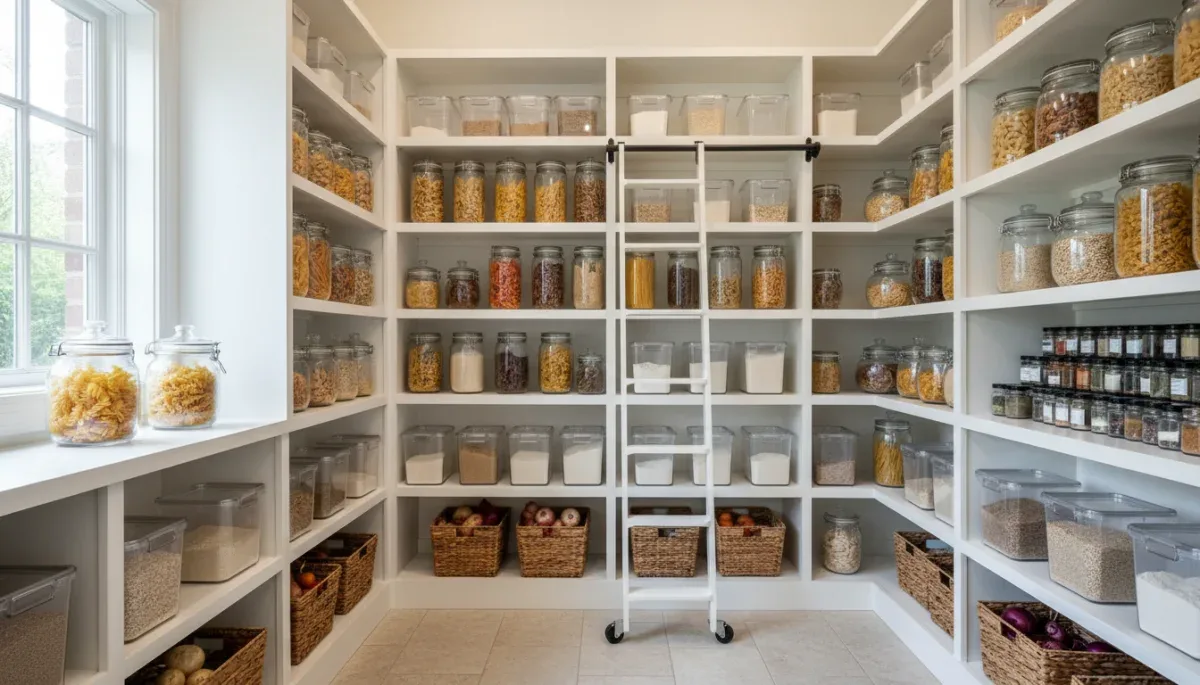
Use glass jars on open shelving, lower pantry levels, and for ingredients that sit in storage for long periods, such as dried beans, white rice, pasta, and whole spices. Use modular, lightweight plastic bins on high shelves, inside deep pull-out drawers, and for high-turnover baking supplies like flour, sugar, and kids' snacks that require frequent, one-handed lifting.
Hybrid pantry blueprint
- Store whole grains, loose tea, and spices in airtight glass to preserve freshness and block odors.
- Place snacks, cereal, and lightweight crackers in easy-open plastic bins accessible to the whole family.
- Keep large 10-to-20-pound reserve bags of flour and sugar in heavy-duty plastic tubs on the floor.
- Use uniform glass jars on exposed countertops where visual aesthetics and light exposure matter.
At a glance
| Feature | What to know |
|---|---|
| Weight and handling | Plastic is significantly lighter and shatterproof, while glass is heavy and fragile. |
| Odor and stain resistance | Glass is non-porous and impervious to stains, whereas plastic can absorb strong scents. |
| Stacking and space | Modular plastic containers generally maximize shelf space better than rounded glass jars. |
| Lifespan and durability | Glass lasts indefinitely if not dropped, while plastic shows cosmetic wear over time. |
Frequently asked questions
Are plastic pantry containers safe for long-term dry food storage?
Yes, food-grade, BPA-free plastic containers are safe for dry staples like rice, flour, and cereal. Ensure the containers carry an airtight seal to protect food from moisture and pantry pests during extended storage periods.
Do glass containers keep food fresher than plastic containers?
Both materials keep food equally fresh if their airtight silicone seals are identical in quality. However, glass provides a superior barrier against external odor absorption and chemical degradation over several years of storage.
Can I put glass pantry containers in the freezer?
Only tempered or borosilicate glass designed for thermal shock should go into the freezer. Standard soda-lime glass can crack if contents expand or if the jar experiences sudden, rapid temperature changes upon removal.
How do I stop plastic containers from getting cloudy over time?
Wash plastic bins on the top dishwasher rack using mild detergents, and avoid abrasive scouring pads. Hand washing with warm soapy water helps maintain plastic clarity and prevents heat-induced surface warping.
The bottom line
Glass is the best option for chemical purity, odor resistance, and long-term durability on accessible shelves, while plastic offers unmatched lightweight handling, shatter resistance, and space-efficient stacking for busy households. A hybrid pantry setup often delivers the most practical results for everyday cooking. Before buying a full matching set, measure your shelf spacing and calculate total weight capacity to ensure your cabinets can safely support your chosen material.
Written by
Maria Eduarda
Journalism student at Puc Minas College, who is very interested in the world of finance. Always looking for new learning and good content to produce.