
How the Home Energy Assistance Program Works for You

Advertisements
The Low Income Home Energy Assistance Program helps qualifying households manage the cost of heating and cooling their homes through federally funded, state-administered grants. This federal initiative provides financial support directly to energy vendors on behalf of eligible low-income families, elderly individuals, and disabled residents who struggle with high utility costs. While the program offers substantial relief, funds are limited each fiscal year, meaning meeting income criteria does not automatically guarantee assistance if local allocations run out before you apply.
Understanding how this home energy assistance program works enables vulnerable households to prepare paperwork early and secure available relief. States, territories, and federally recognized tribal governments receive block grants from the federal government and establish their own specific eligibility limits, benefit sizes, and application timelines within federal guidelines. Because each state manages its program independently, the specific rules for your area will reflect local climate demands, fuel types, and state poverty guidelines.
What the energy assistance program is and how funding operates
The Low Income Home Energy Assistance Program, commonly known as LIHEAP, is a federally funded initiative managed at the national level by the Office of Community Services within the Administration for Children and Families at the U.S. Department of Health and Human Services. Rather than distributing aid directly from Washington, the federal government awards annual block grants to all fifty states, the District of Columbia, U.S. territories, and tribal organizations. These local jurisdictions design and operate energy assistance initiatives tailored to their specific regional weather conditions, utility pricing structures, and community demographics.
Anúncios
Because funding relies entirely on annual congressional appropriations, total program resources fluctuate from year to year. Each state receives a predetermined portion of federal funds and establishes opening dates for application windows, usually prioritizing households with vulnerable members before opening access to the general public. Once a state or local administrative agency exhausts its allocated budget for the season, it must close the application process, even if additional qualified applicants remain in need of support.
The administrative structure means that while federal law sets minimum and maximum parameters, local social service agencies, community action partnerships, and county departments handle direct processing. These localized offices review individual documentation, calculate benefit amounts based on established state formulas, and authorize financial credits directly with utility companies and bulk fuel suppliers across their jurisdictions.
Types of energy support available to households
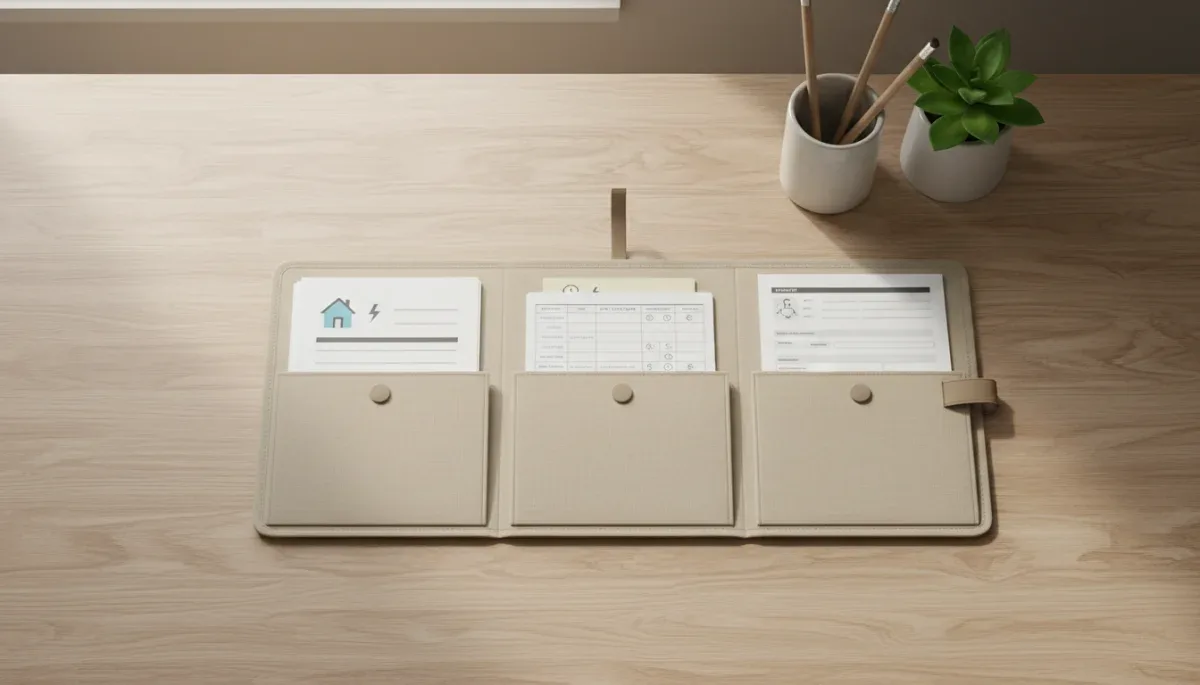
Assistance through the home energy assistance program generally falls into several distinct categories designed to address ongoing utility burdens as well as urgent household emergencies. While regular heating assistance remains the largest component nationwide, many states also operate cooling programs during extreme summer heat, emergency crisis intervention services, and energy-related home repairs to address systemic residential efficiency issues.
Anúncios
Key support components
- Regular heating assistance: Provides a one-time seasonal payment toward primary winter heating sources, including electricity, natural gas, heating oil, propane, kerosene, wood, or coal.
- Cooling assistance: Helps lower-income households in warmer climates manage summer electric bills driven by air conditioning and fan operation.
- Crisis energy intervention: Delivers rapid financial or fuel aid to households facing immediate shutoff notices, depleted fuel tanks, or broken heating systems during severe weather.
- Weatherization and minor repairs: Allocates a portion of grant funds to improve residential insulation, seal drafts, or repair unsafe heating and cooling equipment to reduce long-term utility consumption.
Emergency crisis assistance operates with faster turnaround times than standard seasonal grants. Under federal guidelines, participating agencies must provide relief within forty-eight hours of an emergency crisis application, or within eighteen hours if the household faces a life-threatening situation such as freezing indoor temperatures during a severe winter storm.
Eligibility standards and income thresholds
Federal law establishes broad eligibility parameters for the home energy assistance program, but states determine exact household income thresholds within those boundaries. Under federal rules, state eligibility caps cannot exceed the greater of 150 percent of the Federal Poverty Guidelines or 60 percent of the State Median Income. Furthermore, states cannot set their income threshold lower than 110 percent of the Federal Poverty Guidelines, ensuring baseline protection for the lowest-earning residents.
In addition to income limits, eligibility formulas consider household size, living arrangements, housing type, and energy burden, which represents the percentage of household income spent on essential energy costs. Families that spend an exceptionally high proportion of their monthly earnings on heating or electricity are often prioritized for larger benefit amounts. Certain public assistance programs can also confer categorical eligibility, streamlining the application process for households already vetted by other state agencies.
Standard qualifications
- Gross income limits: Total pre-tax income for all household members must fall at or below the published state guidelines at the time of writing.
- Categorical eligibility: Households where members receive Supplemental Nutrition Assistance Program benefits, Supplemental Security Income, or Temporary Assistance for Needy Families often qualify automatically under state rules.
- Vulnerability status: Priority scoring frequently favors households with young children, adults age sixty and older, or individuals with documented medical disabilities.
- Residential responsibility: Applicants must demonstrate direct responsibility for home energy bills, either through an active utility account in an adult occupant's name or through rent that explicitly includes energy charges.
How benefits are calculated and paid to providers
Benefit calculations for the home energy assistance program do not follow a flat payment model. Instead, state agencies use tiered matrix formulas designed to deliver the largest assistance amounts to households with the lowest incomes and the highest energy burdens. Variables entered into these calculations typically include total household size, gross annual income, primary fuel type, local climate zones, and housing structure characteristics.
In almost all cases, approved funds are not paid as cash or deposited into an applicant's personal bank account. The administering agency transmits payments directly to the designated utility provider or bulk fuel vendor as a billing credit. When the transaction completes, the credit appears on the recipient's utility statement, offsetting current charges or reducing accumulated past-due balances.
For households that rely on delivered fuels such as propane, heating oil, or firewood, the administering office coordinates directly with registered commercial fuel dealers. The agency issues an authorization voucher, and the vendor delivers the contracted fuel quantity to the home, billing the state program directly up to the approved benefit limit.
The application process and required paperwork
Applying for the home energy assistance program requires thorough preparation, as incomplete documentation represents the primary cause of application delays. Depending on the state, residents can submit applications online through dedicated state benefit portals, by mail, or in person at local community action agencies. Early application windows frequently open in autumn for senior citizens and households with medically vulnerable residents, followed by general enrollment periods for all qualifying households.
Applicants must assemble detailed financial and residential records covering every person residing in the dwelling. Because program administrators must verify total household income, failing to disclose income for any adult occupant can result in an immediate denial or prolonged administrative review.
Common documentation requirements
- Proof of income: Recent pay stubs for all working adults, annual Social Security award letters, pension statements, or unemployment benefit summaries covering the required verification period.
- Identification records: Government-issued photo identification for the primary applicant along with Social Security numbers and proof of legal residency for all household members.
- Current utility statements: Copies of recent electric, gas, or delivered fuel bills showing the account holder's name, service address, account number, and current account balance.
- Housing verification: A lease agreement, mortgage statement, or landlord letter confirming residency and clarifying whether heating or cooling costs are billed separately or included in rent.
Special situations for renters and subsidized housing
Renters are fully eligible to apply for the home energy assistance program, provided they meet standard income and residency guidelines. If a tenant pays their heating or cooling costs directly to a utility company, their application is processed in the same manner as a homeowner. However, specific rules apply when utility charges are bundled into monthly rental payments.
When heating or cooling expenses are included in rent, the applicant must typically provide a rental agreement or a signed landlord verification form showing that energy costs are part of the housing fee. Some states provide a modified direct benefit check or landlord voucher to qualifying renters in these circumstances, though benefit amounts may be adjusted to account for indirect billing structures.
Residents living in federally subsidized housing where utility allowances are already provided, such as Section 8 housing or public housing complexes, face unique state-level rules. If a subsidized tenant pays an out-of-pocket utility bill that exceeds their standard utility allowance, many states permit them to receive energy assistance. Applicants in subsidized units should verify their local agency's specific treatment of utility allowances before submitting their paperwork.
At a glance
| Program Factor | What to Know |
|---|---|
| Administration | Federally funded through block grants and operated locally by state, territory, and tribal agencies. |
| Payment Method | Direct credits sent to utility companies and fuel vendors rather than direct cash to recipients. |
| Income Eligibility | Typically capped at 60 percent of State Median Income or 150 percent of Federal Poverty Guidelines. |
| Funding Limits | Distributed on a first-come, first-served basis until allocated seasonal funds are exhausted. |
Frequently asked questions
Does receiving energy assistance affect other government benefits?
No, energy assistance payments do not count as taxable income and do not reduce eligibility or benefit amounts for other federal assistance programs like Supplemental Nutrition Assistance Program, Medicaid, or Supplemental Security Income.
Can homeowners and renters both qualify for this program?
Yes, both homeowners and renters can qualify as long as they meet income criteria and demonstrate responsibility for heating or cooling costs, whether billed directly by utilities or included in rent.
How long does it take for an application to be approved?
Standard applications typically take between thirty and forty-five days to process, while emergency crisis applications must be resolved within forty-eight hours, or eighteen hours in life-threatening conditions.
Do I have to be behind on my utility bill to apply?
No, you do not need an overdue balance or shutoff notice to receive regular seasonal assistance, although crisis assistance programs do require an active disconnect notice or emergency fuel shortage.
The bottom line
The Low Income Home Energy Assistance Program delivers critical financial relief to help eligible households maintain safe indoor temperatures without sacrificing other basic necessities. Because program rules, application dates, and funding availability vary significantly across jurisdictions, prospective applicants should contact their local community action agency or visit their state government's official social services portal at the time of writing to confirm exact local deadlines and filing requirements.
Written by
Maria Teixeira
Maria Teixeira writes about tech & gadgets, news & benefits and home finds for newepisody.com. Each article explains how things work, compares published details such as prices, policies and program rules, and points readers to the official source before they decide.