
Advertisements
Spatial audio technology in headphones recreates cinema-quality surround sound through advanced head tracking and object-based audio processing, revolutionizing home entertainment in 2026.
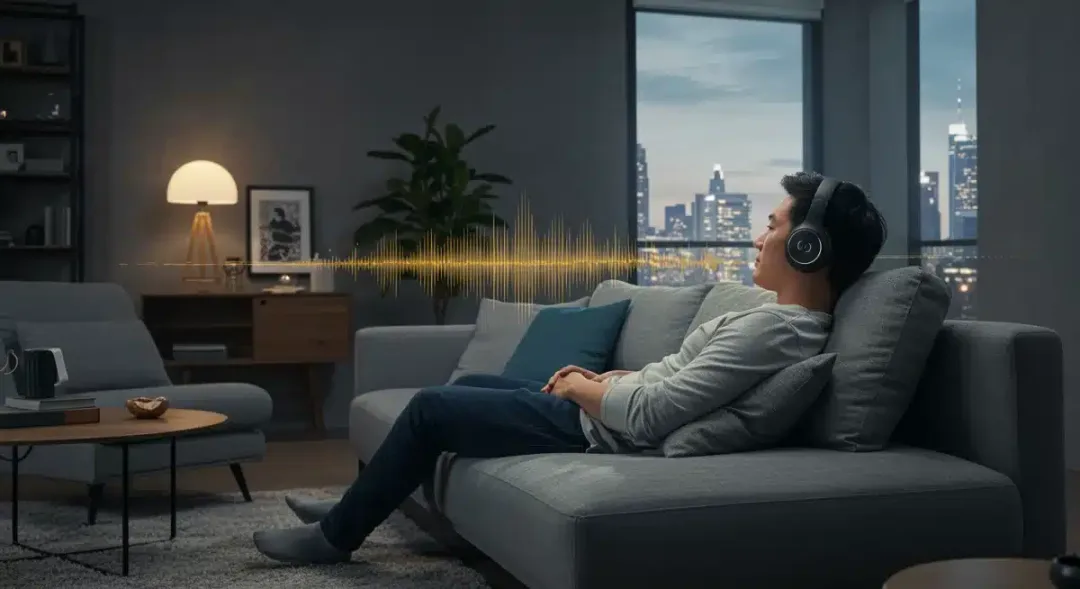
The way we experience movies, music, and games has fundamentally shifted. The Rise of Spatial Audio: How Headphones Are Recreating the Cinema Experience in 2026 represents a technological leap that brings theater-quality sound directly to your ears. What once required expensive surround sound systems and dedicated rooms now fits comfortably on your head, delivering immersive audio that rivals the best cinema auditoriums. This transformation didn’t happen overnight, but the convergence of several technologies has created an experience that feels genuinely revolutionary.
Understanding Spatial Audio Technology
Spatial audio goes far beyond traditional stereo sound. While stereo creates a simple left-right soundscape, spatial audio builds a three-dimensional environment where sound objects move around you in precise locations. The technology uses head-related transfer functions (HRTFs) to simulate how your ears perceive sound in the real world, accounting for the shape of your ears, head size, and even shoulder characteristics.
Anúncios
The core innovation lies in object-based audio rendering. Instead of mixing sounds to fixed channels, spatial audio treats each sound element as an independent object with its own position in three-dimensional space. When you move your head, the audio scene remains anchored to the environment while your perspective shifts naturally, just as it would in real life.

How Head Tracking Enhances Immersion
Modern spatial audio headphones incorporate sophisticated motion sensors that track every head movement in real time. These sensors, typically combining accelerometers and gyroscopes, feed data to audio processing algorithms that adjust the sound field accordingly. When you glance left to check on a character in a movie scene, their voice follows their on-screen position, creating a seamless connection between visual and auditory perception.
- Microsecond-level latency ensures audio adjustments feel instantaneous
- Six-axis motion sensing captures pitch, yaw, and roll movements
- Calibration processes personalize HRTF to individual ear geometry
- Continuous tracking maintains illusion even during extended listening sessions
The result is a sense of presence that stereo simply cannot replicate. Dialogue appears to come from specific screen positions, ambient sounds create genuine atmosphere, and musical elements gain spatial dimension that reveals new details in familiar recordings.
Anúncios
The Evolution of Cinema Sound at Home
The journey from mono to surround to spatial audio spans decades of innovation. Early home theater systems brought multi-channel sound to living rooms, but limitations remained apparent. Speaker placement required careful positioning, room acoustics introduced unwanted coloration, and neighbors often suffered from sound bleed during late-night viewing sessions.
Headphones eliminated these problems entirely. Isolation from environmental noise, precise sound delivery directly to the ears, and personal volume control made headphone listening appealing. However, traditional headphone audio lacked the spaciousness and naturalness that made cinema sound so impactful. Spatial audio technology finally bridges this gap, delivering the emotional impact of theater sound through a personal listening device.
Key Technologies Powering 2026 Spatial Audio
This year’s spatial audio implementations benefit from several technological advances that have matured significantly. Processing power in mobile devices now handles complex audio calculations locally, while dedicated headphone chips manage real-time rendering without draining batteries excessively.
- Dolby Atmos and DTS:X object-based audio formats provide universal compatibility
- Apple’s Adaptive Audio and Sony’s 360 Reality Audio establish ecosystem standards
- Bluetooth LE Audio reduces latency while maintaining high fidelity
- AI-powered room modeling simulates acoustic environments
Content availability has expanded dramatically. Major streaming platforms now offer extensive spatial audio catalogs spanning movies, television series, and music. Game developers integrate spatial audio as a core design element, creating competitive advantages for players using compatible headphones. Even podcast producers experiment with spatial storytelling techniques.
Choosing the Right Spatial Audio Headphones
Not all spatial audio headphones deliver equal experiences. Technical specifications reveal important differences, but real-world performance varies significantly based on implementation quality and personal preferences. Understanding key features helps make informed purchasing decisions.
Driver size and design influence sound quality more than spatial audio processing itself. Larger drivers typically produce more authoritative bass and smoother treble, while advanced materials like beryllium or graphene diaphragms reduce distortion. However, the spatial audio processing chain ultimately determines how effectively these physical capabilities translate into three-dimensional soundscapes.
Essential Features to Evaluate
When evaluating spatial audio headphones, certain features deserve particular attention. Active noise cancellation has evolved beyond simple isolation to become an integral part of the spatial experience, blocking environmental distractions that would break immersion. Transparency modes now offer natural passthrough for awareness when needed, intelligently mixing external sounds with audio content.
- Head tracking precision: sub-degree accuracy preferred for seamless experience
- Codec support: LDAC, aptX Lossless, or proprietary formats for high-resolution audio
- Battery life: minimum 20 hours with spatial audio enabled
- Comfort: lightweight construction with breathable materials for extended wear
- Multi-device connectivity: simultaneous pairing to phone and computer
Price points range from affordable models offering basic spatial processing to premium options delivering reference-quality reproduction. The investment often proves worthwhile for serious viewers seeking cinema-quality experiences without home theater installations.
Spatial Audio in Gaming and Interactive Media
Gaming represents one of spatial audio’s most compelling use cases. Competitive players gain genuine advantages when they can accurately locate opponents by sound alone, while narrative games achieve new emotional depth through spatially positioned dialogue and environmental audio cues.
The technology transforms competitive gaming fundamentally. Traditional stereo setups offer only general directional information, forcing players to guess precise locations. Spatial audio reveals exact positions, distance, and even height differences between sound sources. This information advantage translates directly into improved reaction times and strategic awareness.
How Game Audio Developers Implement Spatial Sound
Modern game engines include sophisticated spatial audio processing as standard features. Developers design audio environments with three-dimensional positioning in mind, placing sound sources at specific coordinates within game worlds. The best implementations consider acoustic properties, simulating how sounds reflect off surfaces and travel through different environments.
- Real-time HRTF processing adapts to individual player head geometry
- Dynamic range compression prevents sudden volume shifts during gameplay
- Cross-platform compatibility ensures consistent experiences across devices
- Integration with game voice chat maintains spatial separation from game audio
Virtual reality applications push spatial audio to its most demanding use cases. In VR, audio must align perfectly with visual elements to maintain presence illusions. Any disconnect between what users see and hear breaks immersion immediately, making spatial audio accuracy critical for successful virtual reality experiences.
The Future of Immersive Audio
What lies ahead for spatial audio technology? Several emerging trends suggest the experience will only become more sophisticated and accessible. Advances in artificial intelligence promise personalized audio processing that adapts to individual hearing characteristics more precisely than current HRTF models.
Neural audio coding represents a paradigm shift in how audio data is compressed and reconstructed. Instead of traditional compression that discards information, neural approaches learn to reconstruct audio in ways that preserve perceptual qualities. This technology enables higher quality streaming at lower bitrates, expanding spatial audio accessibility to users with limited bandwidth.
Emerging Applications and Possibilities
Beyond entertainment, spatial audio finds applications in education, healthcare, and professional fields. Language learning benefits from spatially positioned native speaker audio. Therapeutic applications use immersive soundscapes for relaxation and meditation. Architects and designers visualize spaces through acoustic simulation before construction.
- Haptic audio integration adds physical sensation to spatial sound experiences
- Social spatial audio creates shared listening spaces for remote collaboration
- Accessibility features help users with hearing impairments customize spatial presentation
- Biometric integration adjusts audio based on stress levels and attention states
The technology continues evolving from a premium feature into an expected standard. As more content adopts spatial audio formats and more devices support the technology, the barrier to entry lowers while the quality ceiling rises.
Maximizing Your Spatial Audio Experience
Owning spatial audio headphones represents only the first step toward optimal immersive experiences. Several factors influence how effectively the technology performs in real-world situations, and understanding these elements helps extract maximum value from your equipment.
Content selection significantly impacts the experience. Not all material benefits equally from spatial audio processing. Movies and television shows mixed in object-based formats like Dolby Atmos deliver the most dramatic improvements, while music recordings vary based on how they were originally produced. Experimentation reveals which content shines brightest in spatial audio.
Optimizing Your Setup
Proper headphone fit dramatically affects spatial audio perception. Seal quality influences bass response and external noise isolation, while positioning affects how HRTFs interact with ear geometry. Taking time to achieve proper fit pays dividends in perceived audio quality.
- Regular firmware updates ensure optimal processing algorithm performance
- Companion apps often include spatial audio customization options
- Room environment affects portable spatial audio less than traditional speaker systems
- Matching source device capabilities with headphone potential maximizes quality
Patience during the adjustment period helps. Our brains need time to recalibrate expectations after years of stereo listening. Initially, spatial audio might feel unnatural or even gimmicky, but continued listening typically reveals increasingly compelling benefits.
| Key Point | Brief Description |
|---|---|
| Head Tracking Technology | Real-time motion sensors track head movement, adjusting sound field to maintain immersive 3D audio positioning |
| Object-Based Audio | Sound elements treated as independent 3D objects with precise positioning, enabling cinema-quality surround sound through headphones |
| Content Ecosystem | Major streaming platforms and game developers now prioritize spatial audio production, expanding available content significantly |
| Personalized HRTF | Calibration processes customize audio processing to individual ear geometry, improving localization accuracy and perceived realism |
Frequently Asked Questions
What makes spatial audio different from regular surround sound?▼Regular surround sound uses fixed channel outputs mapped to specific speaker positions, while spatial audio uses object-based positioning that moves freely in three-dimensional space. Combined with head tracking, spatial audio creates a personalized, dynamic sound field that adapts to your movement, unlike traditional multi-channel setups.
Do I need special content to use spatial audio headphones?▼Spatial audio headphones can play any audio content, but you’ll experience the most significant improvement with content specifically mixed in spatial audio formats like Dolby Atmos, DTS:X, or 360 Reality Audio. Major streaming services offer extensive libraries of spatial audio content across movies, television, and music.
Can spatial audio work with any smartphone or computer?▼Device compatibility varies by operating system and hardware capabilities. iOS devices with recent updates support spatial audio natively through Apple Music and supported apps. Android compatibility depends on the manufacturer, with Samsung and Google offering native spatial audio support. Computers require compatible software and codecs for full functionality.
How does head tracking work in spatial audio headphones?▼Head tracking uses built-in accelerometers and gyroscopes to detect even subtle head movements in real time. This data feeds the audio processor, which adjusts the sound field to maintain the illusion that audio sources remain fixed in your environment. When you turn your head, sounds shift accordingly, just as they would in the real world.
Are expensive spatial audio headphones worth the investment?▼Premium spatial audio headphones typically offer superior driver quality, more accurate head tracking, better comfort for extended wear, and advanced noise cancellation. However, mid-range options from reputable brands provide excellent spatial audio experiences. The best choice depends on your usage patterns, quality expectations, and budget constraints.
Conclusion
Spatial audio technology has fundamentally transformed how we experience sound through headphones, bringing cinema-quality immersion to personal listening. The combination of object-based audio rendering, precise head tracking, and increasingly accessible hardware creates possibilities that seemed impossible just years ago. Whether you’re watching movies, playing games, or exploring music, spatial audio adds dimension that traditional stereo simply cannot match. As the technology continues evolving and content libraries expand, the line between theater experiences and home listening will only continue blurring, making now the ideal time to explore what spatial audio can add to your entertainment journey.