
Advertisements
The landscape of education in the United States is undergoing a dramatic transformation driven by cutting-edge technologies that personalize learning, enhance engagement, and prepare students for a digital future.
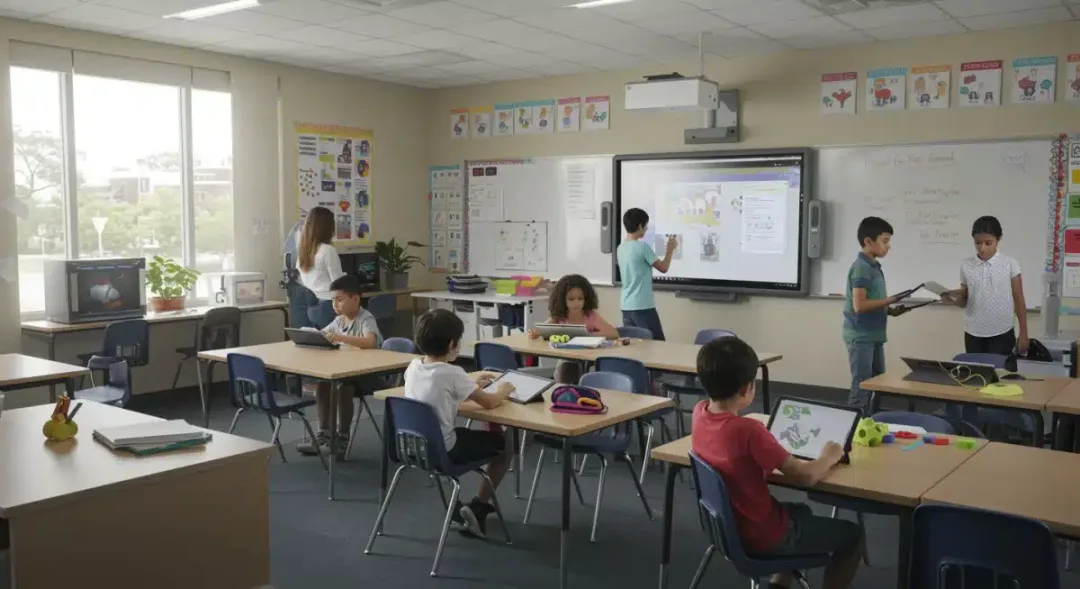
Walk into any American classroom today and you will notice something different. The traditional chalkboard has given way to interactive displays, textbooks are becoming digital companions, and artificial intelligence is helping teachers identify students who need extra support before problems even emerge. education technology trends are no longer a distant vision of the future but a present reality reshaping how millions of American students learn and grow. This transformation extends beyond simple digitization, touching every aspect of the educational experience from kindergarten to graduate school.
Artificial Intelligence and Personalized Learning Platforms
Artificial intelligence has emerged as one of the most impactful forces in American education, fundamentally changing how students interact with learning materials. Unlike the one-size-fits-all approach that dominated classrooms for generations, AI-powered platforms now adapt in real-time to each student’s strengths, weaknesses, and learning pace. These systems analyze thousands of data points to create customized learning pathways that keep students engaged while ensuring they master foundational concepts before moving forward.
Anúncios
The adoption of AI in education has accelerated dramatically since 2020, with school districts across the country investing heavily in intelligent tutoring systems and predictive analytics tools. Teachers report that these platforms free them from repetitive administrative tasks, allowing them to focus on what they do best: mentoring, inspiring, and connecting with students on a personal level.
Key Applications of AI in Education
- Intelligent tutoring systems that provide instant feedback and explanations
- Predictive analytics identifying students at risk of falling behind
- Automated grading for written assignments and essays
- Natural language processing tools helping English language learners
- Chatbot assistants available 24/7 for student questions
Despite concerns about data privacy and the role of human teachers, the integration of AI in American classrooms continues to expand. Schools that have implemented these systems report improved student outcomes, particularly in mathematics and reading comprehension, where adaptive learning technology can address gaps in understanding more efficiently than traditional methods.

Virtual and Augmented Reality Transforming Experiences
Imagine a biology student examining a beating human heart from all angles, or a history student walking through ancient Rome during the height of the Empire. Virtual and augmented reality technologies are making these immersive experiences possible in American schools, creating opportunities for experiential learning that were previously unimaginable. These technologies transport students beyond the boundaries of their physical classrooms, offering hands-on exploration of concepts that previously existed only in textbooks.
Anúncios
The cost of VR and AR equipment has decreased significantly, making it more accessible for school districts with limited budgets. Many schools now have VR headsets available for classroom use, allowing teachers to incorporate virtual field trips and interactive simulations into their lesson plans. Students can explore the solar system, conduct virtual chemistry experiments, or practice dangerous procedures in a safe digital environment.
Research indicates that immersive learning experiences through VR can improve retention rates by up to 75% compared to traditional instruction. The emotional connection students form with these experiences tends to make lessons more memorable and meaningful. However, educators emphasize that these technologies work best as supplements to, not replacements for, traditional teaching methods.
Benefits of Immersive Technologies
- Visualizing abstract concepts in three dimensions
- Providing safe environments for practicing high-risk scenarios
- Enriching empathy and cultural understanding through virtual experiences
- Increasing student engagement and participation
- Offering access to environments otherwise impossible to visit
As hardware becomes more affordable and content libraries expand, experts predict that VR and AR will become standard tools in American education within the next decade.
Cloud-Based Learning Management Systems
The shift to cloud-based learning management systems represents one of the most significant infrastructure changes in American education history. Platforms like Canvas, Google Classroom, and Blackboard have become the digital backbone of schools across the nation, providing centralized hubs where students access assignments, submit work, communicate with teachers, and track their academic progress. These systems eliminate many of the friction points that previously complicated the educational experience.
Cloud technology enables seamless collaboration among students working on group projects, regardless of their physical location. Teachers can provide real-time feedback on assignments, making the learning process more dynamic and responsive. Parents gain easier access to their children’s academic progress, fostering stronger home-school connections. The administrative benefits extend to school administrators, who can analyze data across entire districts to identify trends and allocate resources more effectively.
The transition to cloud-based systems accelerated dramatically during the pandemic, forcing schools that had been reluctant to adopt new technology to embrace digital transformation. Today, the vast majority of American schools utilize some form of learning management system, and students as young as elementary school are navigating these platforms with remarkable ease.
Mobile Learning and Microlearning Revolution
American students today are more connected to their mobile devices than ever before, and education is meeting them where they already are. Mobile learning applications have exploded in popularity, allowing students to study vocabulary during commutes, review lecture recordings during lunch breaks, or complete assignments on their smartphones. This shift reflects broader changes in how people consume information and engage with educational content.
Microlearning, the practice of delivering content in small, focused chunks, has proven particularly effective for retention and engagement. Rather than lengthy lectures or extensive reading assignments, students now access bite-sized lessons designed to be completed in just a few minutes. This approach aligns with modern attention spans and the demands of busy schedules, making learning more accessible to working adults and students with multiple commitments.
Educational apps have become sophisticated tools, incorporating gamification elements that make learning feel like play. Students earn points, unlock achievements, and compete with classmates, transforming the learning experience into an engaging challenge rather than a tedious obligation. Research shows that gamified learning can increase motivation and persistence, particularly among students who struggle with traditional academic approaches.
Popular Mobile Learning Approaches
- Flashcard apps for vocabulary and fact memorization
- Language learning platforms with speech recognition
- Math and science problem-solving games
- Podcast-based learning for auditory learners
- AR-enhanced location-based learning experiences
The mobile-first approach to education recognizes that learning does not stop when students leave the classroom. By providing access to educational content around the clock, schools are enabling continuous learning that extends beyond traditional school hours.
Data Analytics Driving Student Success
Educational data analytics has emerged as a powerful tool for improving student outcomes across the United States. Schools now collect vast amounts of information about student performance, engagement patterns, and learning behaviors. When analyzed properly, this data reveals patterns that help educators intervene at critical moments, providing support to students who might otherwise slip through the cracks.
Predictive analytics uses historical data to identify students who are at risk of failing courses or dropping out. These early warnings enable teachers and counselors to reach out proactively, offering resources and support before small problems become insurmountable challenges. Schools implementing these systems report significant improvements in graduation rates and college enrollment.
Beyond individual student support, analytics helps school administrators make better decisions about curriculum, resource allocation, and instructional strategies. By identifying which programs are producing results and which need improvement, data-driven education allows for continuous refinement of teaching approaches. Privacy concerns remain important, however, and schools must balance the benefits of data analysis with保护 of student information.
Cybersecurity Protecting Educational Institutions
As schools become increasingly digitized, cybersecurity has become a critical concern for educational institutions across America. Ransomware attacks targeting school districts have made headlines in recent years, disrupting learning and costing millions of dollars in recovery efforts. Schools now recognize that protecting student data and maintaining operational continuity requires robust cybersecurity measures.
Many school districts have invested in dedicated IT security personnel and comprehensive security frameworks. Training teachers and staff to recognize phishing attempts and follow security protocols has become a priority. Students themselves are receiving education about digital citizenship and online safety, preparing them to navigate an increasingly complex digital world.
The rise of remote and hybrid learning has expanded the attack surface for educational institutions. Students accessing school networks from home through personal devices create new challenges for security teams. Implementing zero-trust security models and multi-factor authentication has become standard practice in forward-thinking districts.
Essential Cybersecurity Measures for Schools
- Multi-factor authentication for all user accounts
- Regular security audits and vulnerability assessments
- Employee training on recognizing security threats
- Robust backup and disaster recovery systems
- Student data privacy compliance with FERPA regulations
Building a culture of cybersecurity awareness requires ongoing effort, but the investment pays dividends in protecting sensitive student information and maintaining trust with families and communities.
The Human Element: Teacher Professional Development
Technology alone cannot transform education; it requires skilled educators who can leverage these tools effectively. Recognizing this truth, schools across the United States have prioritized teacher professional development in educational technology. Training programs now focus not just on how to use specific tools, but on when and why to integrate technology meaningfully into instruction.
Many school districts have created technology integration specialist positions dedicated to supporting colleagues in adopting new tools. These specialists model effective practices, provide one-on-one coaching, and help teachers troubleshoot challenges. The shift from viewing technology as an add-on to recognizing it as an integral part of teaching has been crucial in realizing the potential of educational innovation.
Veteran teachers who initially felt intimidated by technology are discovering that these tools can enhance rather than replace their expertise. AI can handle routine tasks, but the human connection, mentorship, and inspiration that teachers provide remain irreplaceable. The most successful implementations of education technology augment rather than replace human teaching, creating partnerships between educators and digital tools.
Conclusion
The tech trends reshaping American education represent a fundamental transformation in how students learn and teachers teach. From AI-powered personalization to immersive virtual reality experiences, these innovations are creating opportunities that would have seemed like science fiction just a decade ago. As we look to the future, the most successful schools will be those that thoughtfully integrate technology while maintaining the human connections that make education meaningful. The journey of transforming American education through technology is ongoing, and the possibilities continue to expand with each passing year.
| Key Trend | Impact on US Education |
|---|---|
| AI-Powered Learning | Enables personalized learning paths and predictive analytics for student success |
| Virtual Reality | Creates immersive experiences for experiential learning across subjects |
| Cloud-Based Systems | Provides centralized platforms for assignment management and collaboration |
| Mobile Learning | Extends learning beyond classroom hours through accessible apps and microlearning |
Frequently Asked Questions
How is artificial intelligence changing classrooms in the United States?▼Artificial intelligence is transforming American classrooms by enabling personalized learning experiences that adapt to each student’s needs. AI-powered platforms analyze student performance data to create customized learning pathways, provide instant feedback on assignments, and identify students who may need additional support before they fall behind. Schools across the country are adopting these tools to improve outcomes in subjects like mathematics and reading.
Are virtual reality and augmented reality widely used in US schools?▼Virtual and augmented reality technologies are becoming increasingly common in American schools, though adoption varies by district resources. These immersive technologies allow students to explore virtual field trips, conduct virtual science experiments, and visualize complex concepts in three dimensions. As hardware costs have decreased, more schools are incorporating VR and AR into their curricula, with research showing improved retention rates compared to traditional instruction.
What are the main benefits of cloud-based learning management systems?▼Cloud-based learning management systems provide centralized platforms where students access assignments, submit work, and communicate with teachers. These systems enable seamless collaboration, real-time feedback, and easier parent access to student progress. They also help administrators analyze data across districts to identify trends and allocate resources more effectively, becoming the digital foundation for modern American education.
How important is cybersecurity in modern education?▼Cybersecurity has become critically important as schools increasingly rely on digital systems and collect more student data. Ransomware attacks on school districts have increased significantly, prompting schools to invest in security personnel, training, and robust protocols. Protecting student information and maintaining operational continuity requires multi-factor authentication, regular security audits, and a culture of cybersecurity awareness among staff and students.
How are schools preparing teachers to use new educational technology?▼Schools are prioritizing teacher professional development through technology integration specialists, one-on-one coaching, and collaborative training programs. The focus has shifted from simply teaching teachers how to use specific tools to helping them understand when and why to integrate technology meaningfully. This approach helps veteran teachers embrace technology as a way to enhance their expertise rather than replace it, creating effective partnerships between educators and digital tools.
Conclusion
The tech trends reshaping American education represent a fundamental transformation in how students learn and teachers teach. From AI-powered personalization to immersive virtual reality experiences, these innovations are creating opportunities that would have seemed like science fiction just a decade ago. As we look to the future, the most successful schools will be those that thoughtfully integrate technology while maintaining the human connections that make education meaningful. The journey of transforming American education through technology is ongoing, and the possibilities continue to expand with each passing year.